Agree the decision
Define the business question, accountable executive and cadence before selecting measures.
- Receives
- Planning priorities and operating questions
- Produces
- Metric and decision register

Present leadership with a clear performance view supported by agreed definitions, source context and useful drilldowns.
Let’s connect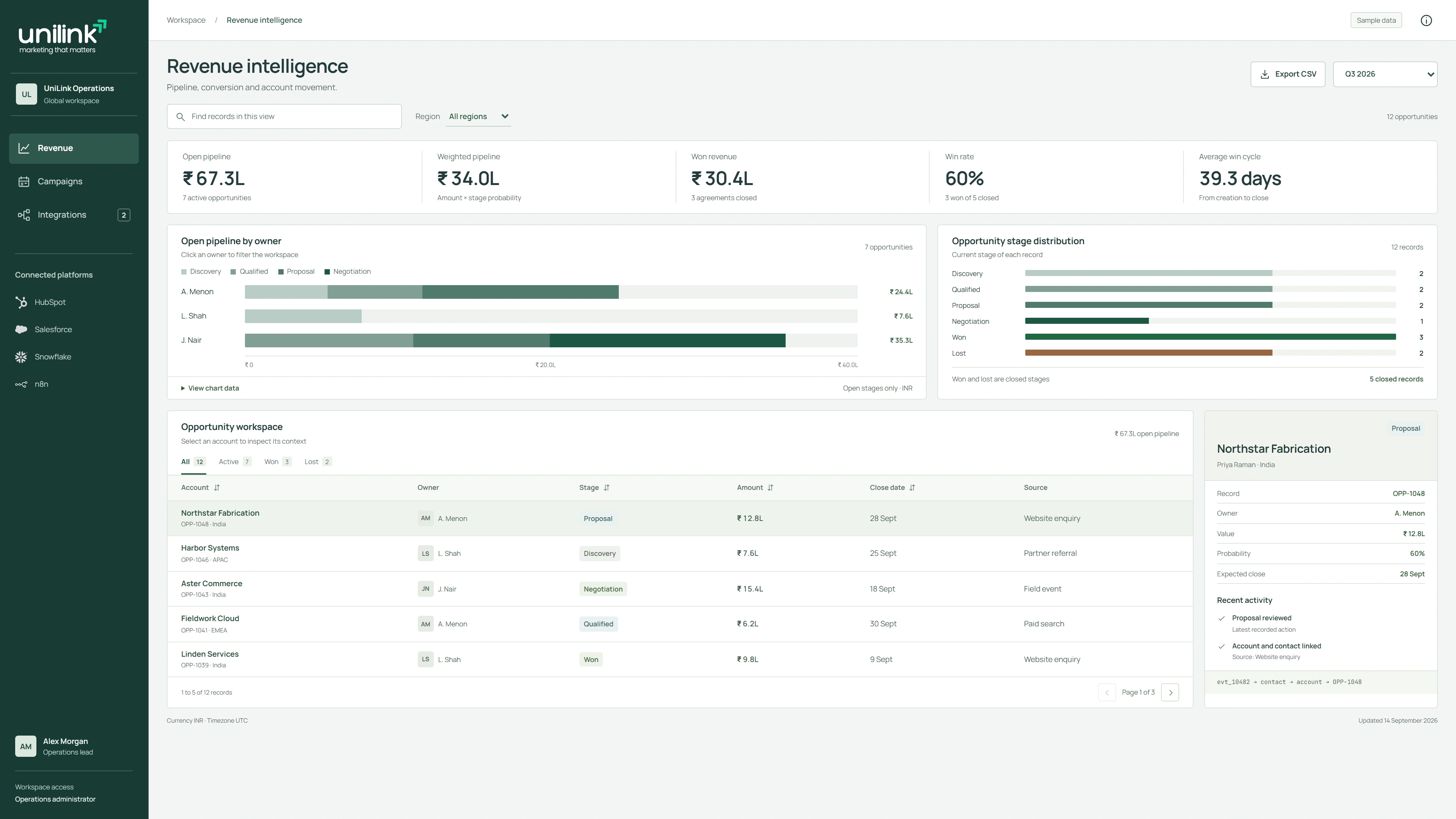
A leadership report should reveal the decision, reporting period and confidence in the underlying data without hiding the path to detail.
Define the business question, accountable executive and cadence before selecting measures.
Reconcile source data at an agreed grain, currency and reporting period.
Present the agreed measures with comparisons, freshness and explanation of material exclusions.
Record the action, owner and review date associated with a reporting discussion.
Select a field to examine its owner, permitted changes and conflict handling. Clear ownership keeps updates consistent across systems.
| Field or object | Accountable owner | Mapping and control |
|---|---|---|
| Business owner | Specifies included records, date role and filters. | |
| Finance and analytics | Aligns fiscal calendar and timezone. | |
| Data operations | Shows the source update and last successful processing time. |
A leadership summary and an operational report can use different grains, but differences in definitions must be explicit.
Record acquisitions, policy changes and taxonomy revisions when they affect period comparisons.
Select the scenarios to discuss with your implementation team.
Executive reporting needs a considered hierarchy. Leaders should be able to understand the state of the business, see what changed and identify where attention is required without navigating operational detail first. This solution organizes those questions into a focused reporting experience.
The scope can include revenue, campaign, lifecycle and operational measures drawn from agreed sources. Each view is designed around a decision and includes the context needed to interpret it, including reporting period, freshness and known data gaps.
Agree a concise set of measures and the decisions they are intended to support.
Organize current state, movement and contributing factors in a readable hierarchy.
Define who can view sensitive business information and which detail each role can access.
Make metric definitions and source ownership available for investigation and review.
Identify the recurring leadership decisions and the evidence each requires.
Validate the data model and reconcile key measures with their source owners.
Establish refresh expectations, access reviews and a process for metric changes.
Read the contracts, controls and failure behavior behind a maintainable implementation.
Embedding or linking BI content can be assessed as part of the scope. Licensing, authentication and tenant settings determine the available approach.
That is part of the intended reporting design. Definitions, source references and ownership should remain accessible without overwhelming the main view.
Tell us where your operations are today. We’ll help you see what comes next.