
Standardize the information that enables a decision
Campaign governance works when it reduces uncertainty. Start with the information a team needs to accept and plan a request: the objective, audience, intended action, channels, required date and accountable business owner. A long form is not inherently a better brief. Each field should support a decision or prevent a recurring problem.
Distinguish a requested launch date from an agreed commitment. Intake should expose dependencies and allow the delivery team to assess capacity before work is scheduled. If a request is incomplete, return it with a specific explanation of what is needed rather than leaving it in an ambiguous status.
Give the campaign a stable identity
A campaign may exist as a CRM record, a project, an email collection and a reporting dimension. A stable campaign identifier connects those representations even when a title changes. Define the relationship between a program, a campaign and an individual channel activity so reporting can aggregate them consistently.
Use naming conventions for readability, but do not rely on names alone for identity. Document permitted source and medium values for tracking parameters and provide a practical way to validate them. Taxonomy is useful only if people can apply it during ordinary work without reconstructing the rules every time.
Make approvals specific
An approval should say what decision is being requested and which version is under review. Brand, legal, audience and budget reviews may have different owners. Define whether they can run in parallel and what happens if their decisions conflict.
Record the approval outcome with the relevant version and reviewer. Decide which subsequent changes invalidate that approval. Without this rule, a team can complete every formal review and still launch material that no reviewer actually saw. Delegation and overdue handling also need an agreed owner.
Use launch criteria that match the campaign
A release checklist should cover the risks that apply to the activity. Relevant checks can include links, audience exclusions, communication preferences, responsive rendering, tracking identifiers and destination readiness. A webinar and a customer email need different details, even if they share some standards.
Do not make a checked box the only evidence. Where practical, link the approved asset, audience definition or validation result. If a launch depends on another system, identify who confirms that dependency is ready. The purpose is a shared understanding of readiness that survives a change of person.
Treat a release as a package of linked evidence
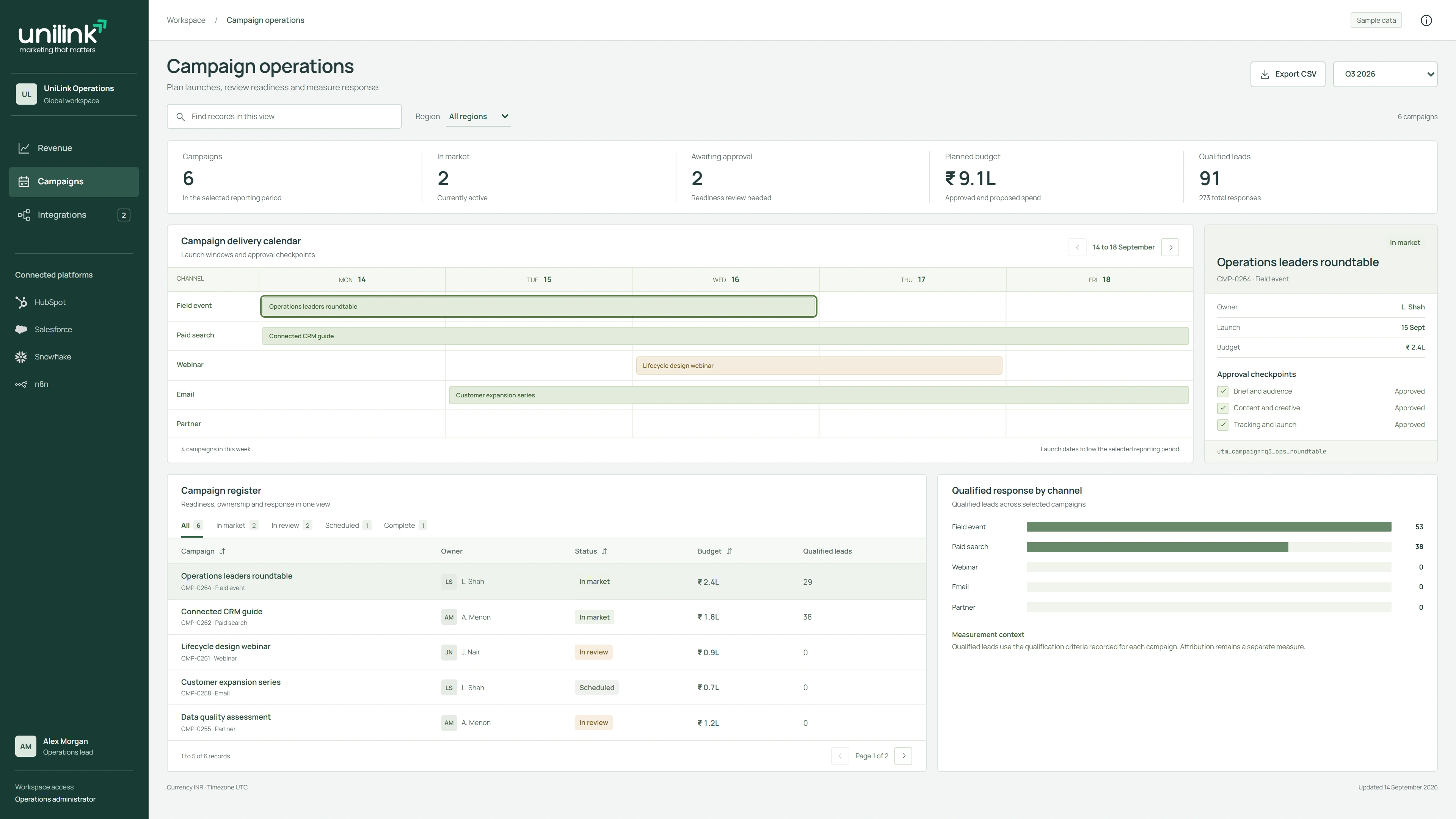
A practical release record connects the campaign identifier, creative version, audience definition, channel configuration and reviewer decisions. If the approved creative changes, identify which reviews are invalidated. If the audience changes, repeat the relevant eligibility checks. Keeping these references together makes it possible to establish whether the material that launched was the material that was approved.
Model activation at the channel level when a campaign spans several destinations. One channel can be active while another has a broken landing page or an unresolved suppression check. Record the actual release time and destination reference for each activity rather than marking the entire campaign complete. This produces a more useful operational review and prevents partial activation from being mistaken for a performance problem.
Review the process as well as the campaign
After launch, examine both marketing performance and operational friction. Late approvals, repeated revisions and incomplete briefs can reveal where the process needs attention. These observations are more useful when they refer to clear stages and responsibilities rather than individual impressions.
Maintain a small set of templates and a named process owner. Update the guidance when channels, systems or team structures change. Governance should remain understandable enough that a new colleague can follow a campaign from its brief to its reporting record and see why each important decision was made.